
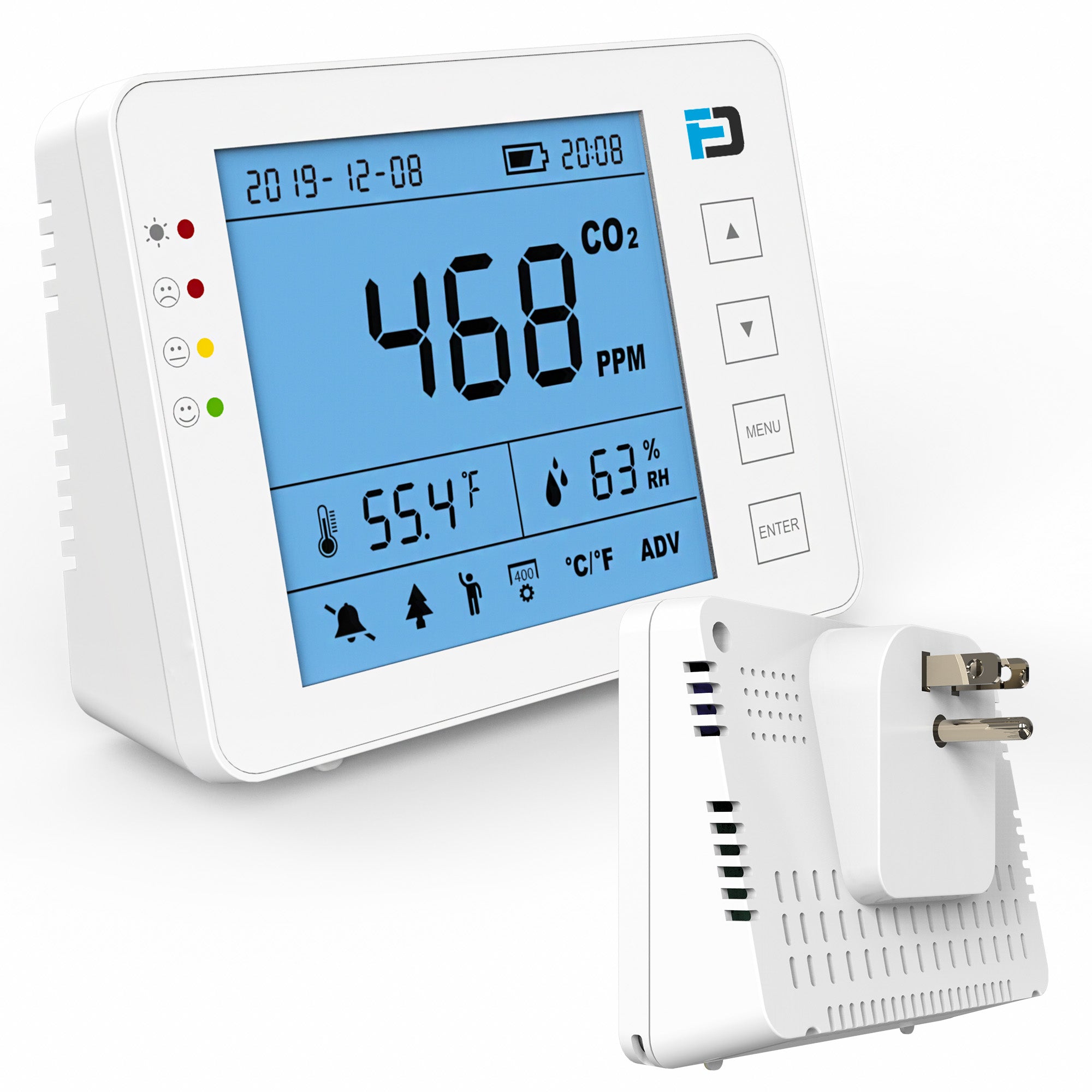
In the rapidly evolving landscape of heavy-duty safety and environmental monitoring, gas detectors and gas analyzers play crucial roles in safeguarding man wellness and ensuring work . These are requirement for sleuthing, measurement, and analyzing various gases in diverse settings, from heavy-duty plants and laboratories to confined spaces and state of affairs monitoring stations. This article delves into the fundamental principles, applications, and advancements of gas detectors and gas analyzers, highlight their import in coeval refuge and a priori practices.
Gas Detectors: Early Warning Systems for Hazardous Gases
Gas detectors are pivotal in identifying the front of on the hook gases in the environment, providing early warnings to prevent accidents and see to it refuge. They come in various forms, including portable handheld and fixed systems installed in workplaces or dangerous areas. The primary feather work of a gas sensor is to ride herd on air tone and detect possibly unwholesome concentrations of gases such as carbon monoxide(CO), methane(CH4), atomic number 1 sulfide(H2S), and atomic number 8(O2).
Modern gas detectors utilize a range of perception technologies, including chemistry sensors, chemical process bead sensors, infrared emission sensors, and semiconductor device sensors. Electrochemical sensors are highly medium and proper for detecting unhealthful gases at low concentrations. Catalytic bead sensors are effective for combustible gases, while infrared light sensors excel in detection gases with distinguishable absorption characteristics, such as CO2. Semiconductor sensors, though less commons, are used for various gas signal detection applications due to their lustiness and versatility.
Gas Analyzers: Precision Tools for Gas Composition Analysis
Gas analyzers, on the other hand, are designed for more hairsplitting and detailed analysis of gas mixtures. They are used in applications that need precise measure of gas concentrations and compositions, such as in chemical processing, situation monitoring, and search laboratories. Gas analyzers provide valuable data for process verify, monitoring, and submission with regulatory standards.
One of the most ordinarily used types of gas analyzers is the gas chromatograph(GC), which separates and quantifies individual gases in a mixture. Gas chromatographs use a column and sensing element system to analyse gas samples, providing detailed information about the authorship of the gases. Other types of gas analyzers let in mass spectrometers, which measure the mass-to-charge ratio of ions, and measurement analyzers, which use unhorse soaking up to determine gas concentrations.
Applications and Advancements
The applications of gas detectors and analyzers span many industries and fields. In heavy-duty settings, hydrogen chloride detector detectors are material for ensuring prole refuge by monitoring dangerous environments for harmful or explosive gases. In environmental monitoring, gas analyzers get over air timber and greenhouse gas emissions, causative to climate transfer studies and regulative compliance. In laboratories and research facilities, gas analyzers cater punctilious data for experiments and work development.
Recent advancements in gas detection and analysis technologies have importantly enhanced their capabilities. Innovations such as radio set communication, miniaturisation, and desegregation with IoT(Internet of Things) systems have improved the functionality and handiness of these . For illustrate, modern font gas detectors can now channel real-time data to centralized monitoring systems, allowing for immediate reply to sensed hazards. Additionally, advancements in sensor applied science have enhanced the sensitivity and specificity of gas detectors, facultative more right and trustworthy measurements.
Conclusion
Gas detectors and gas analyzers are obligatory tools in ensuring refuge and precision across various sectors. While gas detectors cater material early on warnings to prevent dangerous situations, gas analyzers offer elaborate insights into gas compositions for work verify and state of affairs monitoring. As engineering continues to advance, these will play an even more substantial role in protective human being health and forward technological sympathy. Understanding their principles, applications, and Holocene epoch developments is necessity for leverage their full potential in today s and dynamic environments.